Apple Is Reportedly Bringing AI to China in December, but Not the New Siri
Apple is finally preparing to bring AI features to China after years of regulatory delays, but the version heading there is already two years old and missing the one feature that matters most to consumers.

Apple (NASDAQ:AAPL | AAPL Price Prediction) closed on Wednesday, October 14, 2026, at a market value of about $5.01 trillion. That made it the second company ever to close above five trillion dollars. Shares rose 0.50% to $342.96 and added 0.59% after hours to $345.00, while NVIDIA (NASDAQ:NVDA) fell 3.16%.
On the same day, reports said Apple is preparing to launch its first Apple Intelligence features in China in December, but the company has not announced a date or issued a press release.
For shareholders, the concern is Apple’s valuation. The stock trades at about 45 times earnings, and the AI it would finally ship in China is the version it introduced in 2024. The all-new Siri AI revealed at WWDC26 is left out.
China is too big for that gap to count as a footnote. Greater China brought in $18.82 billion of Apple’s $109.42 billion in June-quarter revenue.
What December Would Deliver
Mark Gurman posted on X on October 14, 2026. He wrote: “NEW: Apple is preparing to launch the first set of Apple Intelligence features in China in December after being stuck in years of regulatory scrutiny.”
The package would reportedly come with an upcoming iOS point release. It includes Writing Tools, notification summaries, Genmoji and Clean Up in Photos, while Apple’s image-generation tools are expected to stay unavailable.
Tim Cook spoke on the July 30, 2026 earnings call. He said Apple had approval “to ship sort of the original features of Apple Intelligence, things like Clean Up and so forth.” He gave no launch date.
Siri AI Stays Out of China
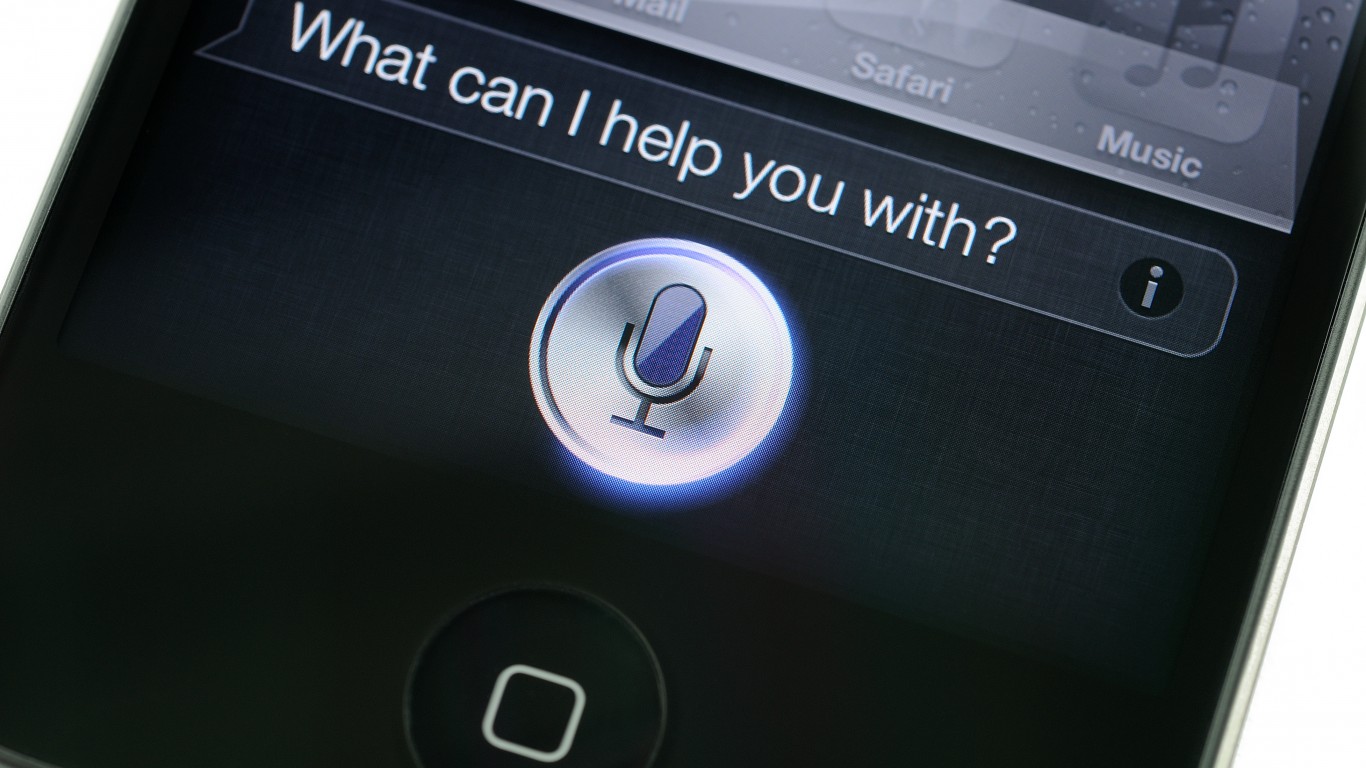
The reported launch leaves out Siri AI and the newer features shipping in the United States in the current software cycle, and Apple executives also reportedly see little chance of Siri AI coming to China anytime soon.
This exclusion is the main story because the assistant is the part of the product that consumers judge. In July, Cook said, “There will be more work required down the road for Siri AI, but we’re at the front end of that.”
Regulators explain the two-year wait for the original features. The Siri gap belongs to Apple, because the work needed to bring its newest assistant to China is only beginning.
Alibaba, Baidu and Beijing’s Filters
Alibaba Group (NYSE:BABA) confirmed in July that it would build its Qwen model into Apple services in China, so that partnership is public. Apple reportedly worked with Alibaba on content filtering built around local rules. Baidu (NASDAQ:BIDU) is reportedly involved in search and Siri.
Updated network access permits from China’s Ministry of Industry and Information Technology list Apple Intelligence next to Alibaba models. No financial terms with either partner have been disclosed.
Working through local partners gets Apple into the market, but it undermines the Apple-controlled privacy pitch it makes elsewhere. Huawei and Xiaomi, meanwhile, have shipped their own assistants all along.
Apple’s business remains strong, as June-quarter revenue grew 16.4%, and EPS of $2.02 beat the $1.89 consensus.

What Could Change the Outlook for AAPL Stock
The stock is priced for an AI story that, in China, is still missing its main feature.
Nvidia has more direct exposure to AI spending. Its Data Center revenue grew 117%, and its GPUs run Apple’s own Private Cloud Compute. That means Nvidia profits from AI demand whether or not Siri ever reaches China.
Nvidia has its own China risk, since its guidance leaves out Data Center compute revenue from China. After the drop, it closed at $221.30.
One sign to check is whether Apple Intelligence actually goes live in China by December 31, 2026. The other is whether Apple names a China date for Siri AI. A confirmed Siri timeline would change this view, and without one, Apple’s China AI plan is a defensive move.
Contact [email protected] for any questions or corrections.
Omor Ibne Ehsan is a writer at 24/7 Wall St. He is a self-taught investor with a focus on growth, cyclical, and dividend equities that have strong fundamentals, value, and long-term potential. He also has an interest in high-risk, high-reward investments such as penny stocks.